The Scoop
Upcoming EVENt
Scatter Vegan Sweets

Wendy Gabbe Day
Friday, Oct 29, 7pm, McNail-Riley House, 601 W. 13th (at Jefferson), Eugene. FREE - Map
Veg Spotlight

Dr. Jonathan Balcombe - Physicians Committee for Responsible Medicine Member and Author, presents to EVEN, "Pleasurable Kingdom: Animals and the Nature of Feeling Good"
Veg Wisdom
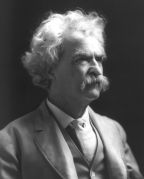
I am not interested to know whether vivisection produces results that are profitable to the human race or doesn't...The pain which it inflicts upon unconsenting animals is the basis of my enmity toward it, and it is to me sufficient justification of the enmity without looking further - Mark Twain
Become a Member

Please visit our sponsors!
Click on their logos below.
Veg Spotlight












Veg Wisdom
We have a choice to use the gift of our lives to make the world a better place. - Dr. Jane Goodall

The Scoop > Other
Jane Goodall Institute
"They are our closest living relatives. And they are being driven to the very brink of extinction by humans who think of them as food instead of friends.
"They" are chimpanzees, who share 98% of our genetic heritage and many of the characteristics that we think of as human. As a primate biologist who has spent more than 40 years studying these remarkable animals, I have seen them from strong family bonds where big sisters "adopt" younger siblings after the death of a mother,. I have seen them laugh and play, nurture and teach their young and display a wide range of emotions—including profound grief over the death of a family member.
But these qualities don't protect chimpanzees from greed, inhumanity and the desperate conditions that drive people to hunt them.
They and other endangered species are targets of the bushmeat trade—the hunting of wild animals to supply the growing demand for wild meat. This appalling practice is not driven by the need to feed starving local people or bring them a better way of life. Instead, this meat ends up in city markets and expensive restaurants throughout Equatorial Africa.
And if you think that the bushmeat trade begins and ends in Africa, think again. "Delicacies" like gorilla hands also find their way to tables of the wealthy in Europe and the United States. To some, it is considered a status symbol. I consider it a crime." Dr. Jane Goodall, DBE, UN Messenger of Peace http://www.janegoodall.org/
Source: The Jane Goodall Institute - Founded by renowned primatologist Jane Goodall, JGI is a global nonprofit that empowers people to make a difference for all living things. We are creating healthy ecosystems, promoting sustainable livelihoods and nurturing new generations of committed, active citizens around the world.
Take a Closer Look at Fish
Although we don't interact with fish enough to realize it, studies prove that fish are smart, interesting animals with their own unique personalities---just like the dogs and cats we share our homes with. And, of course, fish have the same capacity to feel pain as do mammals and birds.
"I wouldn't eat a grouper any more than I'd eat a cocker spaniel. They're so good-natured, so curious. You know, fish are sensitive, they have personalities, they hurt when they're wounded."
Dr. Sylvia Earle, one of the world's foremost marine biologists
If You Wouldn't Eat Your Dog...
Although we don't interact with fish enough to realize it, studies prove that fish are smart, interesting animals with their own unique personalities---just like the dogs and cats we share our homes with. And, of course, fish have the same capacity to feel pain as go mammals and birds.
Fish Are Smart...
Biologist Culum Brown, PhD, says, "Fish are more intelligent than they appear. In many areas, such as memory, their cognitive powers match or exceed those of 'higher' vertebrates, including non-human primates."
Eating Fish Supports Cruelty to Animals...
Fish are intelligent animals who feel pain just as we do. Eating them is bad for our health (Seafood is the number one cause of food poisoning in the United States.) and supports cruelty to animals. Visit www.FishingHurts.com to learn fish-free recipes and find out what else you can do to help fish.
A Cow Can Live 20-25 Years...
A cow can live 20-25 years, but a typical factory-farmed cow is "used up" and slaughtered in 4 years. For Benjamin, a rescued calf who now lives happily at a sanctuary, his life would probably have lasted about four months and his skin would have been used to make gloves and shoes. Source: PETA
Is There Something You Don't Know About Pigs?
Do you know how pigs in the U.S. live their lives?
In the U.S., more than 97% of pigs—smart, social, interesting animals—are raised on factory farms. They spend their entire lives in cramped, filthy warehouses, where they never see the sun or breathe fresh air. Because of their hideous living conditions, more than 70 percent of the pigs have pneumonia by the time they are kicked and prodded onto trucks bound for slaughterhouses. As piglets, they are ripped away from their mothers when they are less than 1 month old and dosed with antibiotics, and they have their tails, teeth, and testicles cut off—all without any pain relief. But even that's not all that they go through.
Breeding sows are imprisoned (there's really no other word for it) in metal gestation crates so small that they can't even turn around or take a single step—many develop painful sores and bruises from being immobilized on a hard surface. Shortly after giving birth, they are forcibly impregnated again. This cycle continues for years until their bodies finally give out and the animals are sent to slaughter. After enduring these hellish conditions for years, squealing pigs are poked, kicked, and dragged onto trucks so that they can be sent to slaughter.
It doesn't have to be this way.
http://blog.peta.org/archives/2008/09/pig_horrors_-_t.php
Source: People for the Ethical Treatment of Animals (PETA)
What About Leather?
Leather Facts:
- Leather sold in stores comes from the skins of not only cows, but also dogs and cats. When you buy leather, you can never be sure where---or who---it comes from!
- It takes the skin of 3,000 cows too supply the NFL with footballs for a year.
- Buying animal products such as leather directly supports the cruelty of factory faming and the misery of the slaughterhouse!
- In summary, leather production harms the animals AND the environment!
The Truth About Fur...
We understand that you probably care about the treatment of animals. However, each year more than 40 million animals are killed in the name of "fashion" for fur coats and trim. These animals are either raised on crowded, filthy fur farms where cruelty is the norm, or trapped in the wild using inhumane and indiscriminate devices such as steel-jaw leg hold traps and strangulation neck snares. Every one of these animals died in a violent death through anal electrocution, gassing, neck breaking, drowning, clubbing, and/or strangulation. Like you and I, animals feel pain. Just by wearing fur, you promote cruelty. Please. Choose compassion. Don't wear fur.
Number of animals used to make an average length fur coat:
Source: Animal Protection Institute
Cruelty of Animal Traps
Every year, millions of animals are trapped, mostly to feed the international fur market. But indiscriminate and cruel traps also trap and kill “non-target” animals like dogs, cats, and even endangered species.
Top Five Reasons to Ban Cruel Traps Now:
- Eliminating them will save wildlife and reduce unnecessary animal pain and suffering.
- Body-gripping traps are cruel and indiscriminate.
- The majority of Americans and veterinary associations oppose leghold traps.
- The use of cruel traps is unnecessary.
- More than 80 countries have banned the leghold trap.
Also, a Conibear trap consists of two metal frames hinged at the center and powered by two torsion springs to create a scissor-like action. The traps are supposed to kill animals instantly by snapping the spinal column at the base of the neck, applying more than 90 pounds of pressure per square inch. However, these traps often miss the spot vital for a quick kill, leaving animals to die a slow, agonizing death.
Born Free USA united with Animal Protection Institute www.bornfreeusa.org